ICRISAT, Marondera University Release High-Yielding Finger Millet Variety in Zimbabwe

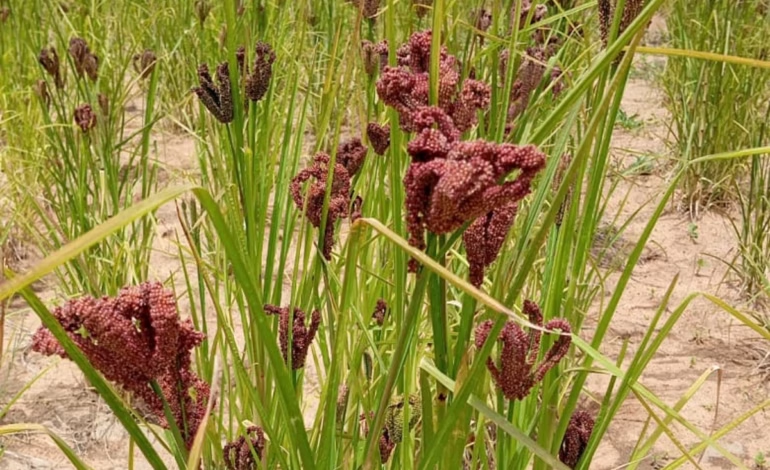
Hyderabad, 18 November, 2026: A new finger millet variety, Muchekeranwa, is expected to help Zimbabwe’s smallholder farmers raise their harvests and incomes and boost commercial production of traditional grains. It was developed by the International Crops Research Institute for the Semi-Arid Tropics (ICRISAT) in partnership with Marondera University Seed Company Pvt Ltd.
Approved for release in Zimbabwe on 12 November 2026, Muchekeranwa has recorded yields of 2.9 tonnes per hectare, against a national average of 0.28 tonnes. At April 2026 market prices of US$364.75 per tonne, farmers achieving these yields could earn about US$956 more in gross revenue per hectare, before production costs.
ICRISAT Director General Dr Himanshu Pathak said the variety could make finger millet a more profitable crop for smallholders while strengthening household food security. “This variety with the potential to deliver ten times the national average yield could fundamentally change the economics of growing finger millet,” he said, adding that it opens opportunities for farmers, seed producers and food processors.
Suited to drought-prone conditions
With rainfall increasingly unpredictable and droughts recurring, early-maturing crops are becoming essential. Muchekeranwa flowers in 65-70 days and matures in about 100 days. It also offers high yield potential, broad adaptability, and tolerance to disease and lodging.
Mr Tinovonga Gonhi, Plant Breeder at Marondera University of Agricultural Sciences and Technology, called it “a game-changer for Zimbabwe’s farmers” that can help them cope with droughts while unlocking the grain’s commercial potential.
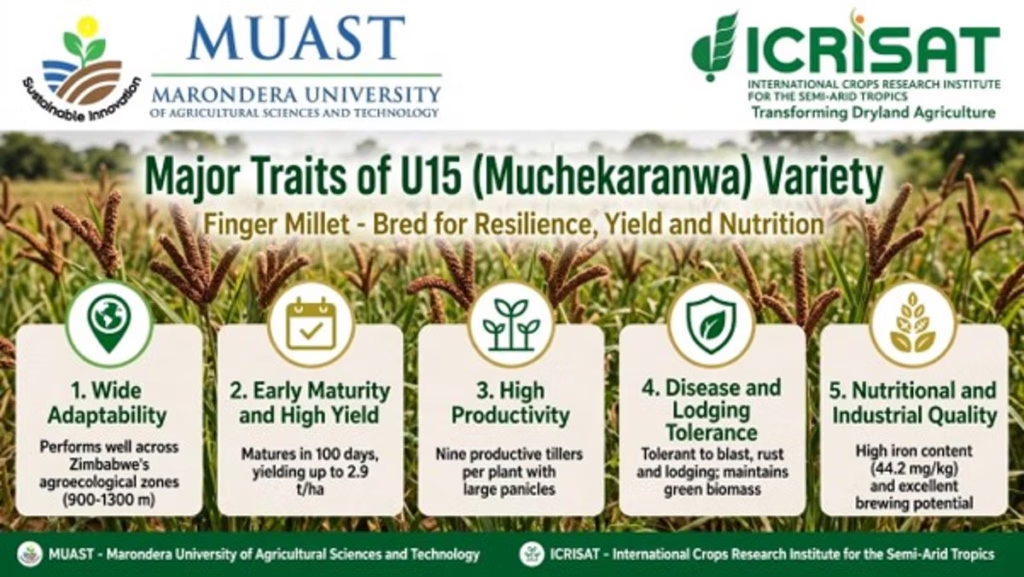
Finger millet is valued in Zimbabwe for its nutrition, drought tolerance and use in local foods and beverages, but limited access to improved varieties and quality seed has held back productivity.
Dr Henry Ojulong, Finger Millet Breeder at ICRISAT, said the release reflects the institute’s commitment to climate-resilient crops and to transforming traditional grain value chains.
Seed access is the next priority
Higher production could stimulate demand for quality seed, expand opportunities for food processors and create new markets for rural enterprises. Realising these benefits will depend on farmers’ access to improved seed and stronger market links.
“The next priority is getting quality seed into farmers’ hands and building reliable supply chains that can support commercial production and attract investment in processing,” said Dr Albert Tsindi, Seed Systems Specialist at ICRISAT